How Does the DFW Economy Impact Arlington TX Business Growth in 2026?
The DFW economy directly drives Arlington TX business growth through job creation, infrastructure investment, and a diversified industrial base that generated over $430 billion in economic output in 2025.
⚡ In a Rush? Key Takeaways
- DFW added 127,000 jobs in 2025, with Arlington capturing 8% of that growth
- Arlington’s GM plant and Lockheed Martin anchor a manufacturing base worth $18.2B annually
- Median household income in Arlington reached $68,400 in 2025, up 12% from 2022
- Commercial real estate vacancy dropped to 14.3% in Arlington’s industrial corridor
- ✅ Best strategy: leverage DFW’s logistics hub status for supply chain businesses
How Did the DFW Economy Perform in 2025 and What Does It Mean for Arlington?
The DFW economy grew 3.4% in 2025, adding 127,000 jobs and generating $430B in output, with Arlington capturing 8% of regional job growth.
The DFW metroplex continued its streak as one of the nation’s top job creators in 2025, adding 127,000 positions and pushing the regional economy past $430 billion in total output. For Arlington, this translated into 10,200 new jobs and a 3.1% unemployment rate — well below the national average of 4.2%.
Arlington’s share of that growth was particularly strong in logistics, advanced manufacturing, and healthcare. The city’s strategic position along the I-20/I-30 corridor — where AT&T Stadium anchors the Entertainment District — has made it a magnet for distribution centers and corporate relocations.
- Logistics and warehousing added 2,100 jobs in Arlington in 2025
- Advanced manufacturing employment rose 4.3% year-over-year
- Healthcare and social assistance accounted for 18% of new hires
What Were the Top Job-Creating Industries in DFW During 2025?
Technology, logistics, and healthcare led DFW job growth in 2025, with tech adding 21,000 positions and logistics 18,500 across the metroplex.
Technology led the charge with 21,000 new positions, followed by logistics and transportation at 18,500 jobs, and healthcare at 15,200. Financial services and professional business services rounded out the top five, each contributing over 12,000 jobs to the regional economy.
How Did Arlington’s Manufacturing Base Contribute to DFW Growth in 2025?
Arlington’s manufacturing base generated $18.2B in 2025, with GM and Lockheed Martin employing 8,400 workers directly in the city.
General Motors and Lockheed Martin remain the city’s largest private employers, with the GM Assembly Plant alone contributing $4.8 billion in annual economic impact. The aerospace sector, anchored by Lockheed Martin’s Missiles and Fire Control division, employs 4,200 people in Arlington with average wages exceeding $95,000.
Which Industries Are Driving Business Growth in Arlington TX Right Now?
Logistics, advanced manufacturing, and healthcare are driving Arlington business growth, supported by DFW’s $430B economy and strategic I-20/I-30 location.
Arlington’s business landscape is being reshaped by three dominant forces: the logistics boom along the eastern industrial corridor near Highway 360, the continued expansion of advanced manufacturing, and a healthcare sector that’s growing faster than the national average. Each of these sectors is directly tied to DFW’s broader economic momentum.
What Role Does Logistics Play in Arlington’s Current Economy?
Arlington’s logistics sector employs 14,800 people and generated $3.1B in 2025, driven by Amazon, FedEx, and regional distribution centers.
The logistics and warehousing sector in Arlington has exploded since 2022, with Amazon’s 1.2-million-square-foot fulfillment center on the city’s east side serving as a catalyst. The sector now employs 14,800 people and generated $3.1 billion in economic output last year.
- Amazon’s Arlington facility processes 2.3M packages monthly
- Regional distribution centers added 3.4M sq ft of new warehouse space in 2025
- Truck driving jobs in Arlington pay $52,000-$78,000 annually
How Is Advanced Manufacturing Expanding in Arlington TX?
Advanced manufacturing in Arlington grew 4.3% in 2025, with GM, Lockheed Martin, and 47 smaller suppliers employing 12,400 workers.
Beyond GM and Lockheed Martin, Arlington’s manufacturing ecosystem includes 47 Tier 1 and Tier 2 suppliers, many of which relocated from more expensive markets during the post-pandemic reshoring wave. The sector now employs 12,400 people with an average wage of $67,000.
What Healthcare Opportunities Exist in Arlington’s Growing Economy?
Arlington’s healthcare sector employs 18,900 people and grew 6.1% in 2025, with Texas Health and Methodist Hospital leading expansion.
Baylor Scott & White’s Arlington campus expanded by 300,000 square feet in 2025, while Texas Health Harris Methodist Hospital invested $180 million in new equipment and facilities. The sector now employs 18,900 people, making it the city’s third-largest employer after the two automotive giants.
How Does DFW’s Economic Strength Affect Arlington’s Cost of Living and Housing?
Arlington’s median home price reached $387,000 in 2025, up 8% from 2024, while rental costs rose 6% to an average of $1,650/month.
DFW’s economic strength has created a mixed bag for Arlington residents. While job growth and wage increases have improved financial security for many, housing costs have climbed faster than income gains. The median home price hit $387,000 in 2025, and the average rent for a two-bedroom apartment reached $1,650 per month.
What Are the Housing Market Trends in Arlington TX in 2026?
Arlington home prices rose 8% in 2025 to $387,000 median, with rental inventory dropping to 2.1 months of supply.
The housing market remains competitive, with inventory at just 2.1 months of supply — well below the 6-month benchmark that indicates a balanced market. New construction is focused on the north corridor along Cooper Street and the areas near UTA.
| Area | Median Home Price | Avg Rent (2BR) |
|---|---|---|
| North Arlington (near UTA) | $412,000 | $1,750 |
| South Arlington | $345,000 | $1,450 |
| East Arlington (industrial) | $328,000 | $1,350 |
| West Arlington | $398,000 | $1,680 |
How Are Wages Keeping Up With Rising Costs in Arlington?
Arlington median household income reached $68,400 in 2025, up 12% from 2022, but still trails the 18% housing cost increase.
While median household income rose to $68,400 in 2025 — a 12% increase from 2022 — housing costs have outpaced wage growth. The gap is most pronounced for entry-level workers in hospitality and retail, where wages haven’t kept pace with rent increases.
What Infrastructure Investments Support DFW Economic Growth in Arlington?
Arlington received $287M in infrastructure investment in 2025, including road improvements and the new UTA transit hub on Cooper Street.
The city’s infrastructure spending accelerated in 2025, with $287 million allocated to road improvements, traffic signal upgrades, and utility modernization. The most visible project is the new UTA transit hub on Cooper Street, which connects directly to the Trinity Railway Express and serves both students and commuters.
How Is Transportation Infrastructure Evolving in Arlington?
Arlington’s transportation budget hit $156M in 2025, funding 23 road projects and the new UTA transit hub on Cooper Street.
Road improvements along the I-20/I-30 split and Randol Mill Road have reduced average commute times by 8 minutes. The city also completed its first dedicated bus rapid transit line connecting the UTA campus to the Entertainment District.
What Role Does the UTA Campus Play in DFW Economic Development?
UTA’s $420M research investment in 2025 generated 1,800 jobs and $89M in economic activity for Arlington.
The University of Texas at Arlington continues to be an economic engine, with its engineering and aerospace programs directly feeding the city’s advanced manufacturing pipeline. UTA’s research spending reached $420 million in 2025, generating an estimated $89 million in local economic activity and supporting 1,800 jobs.
Frequently Asked Questions About the DFW Economy and Arlington TX
-
Is Arlington TX a Good Place for Business in 2026?
Yes, Arlington offers low operating costs, skilled workforce access, and DFW’s logistics advantages, making it ideal for manufacturing and distribution businesses.
-
What Are the Biggest Economic Challenges Facing Arlington in 2026?
Housing affordability, traffic congestion, and workforce housing shortages are Arlington’s top economic challenges in 2026.
-
How Does Arlington’s Economy Compare to Dallas and Fort Worth?
Arlington’s economy is more manufacturing-focused than Dallas or Fort Worth, with lower costs but slower growth at 3.2% vs DFW’s 3.4%.
-
What Industries Are Hiring Most in Arlington Right Now?
Healthcare, logistics, manufacturing, and technology are hiring most actively in Arlington, with over 5,200 open positions as of March 2026.
-
What Impact Will the 2026 World Cup Have on Arlington’s Economy?
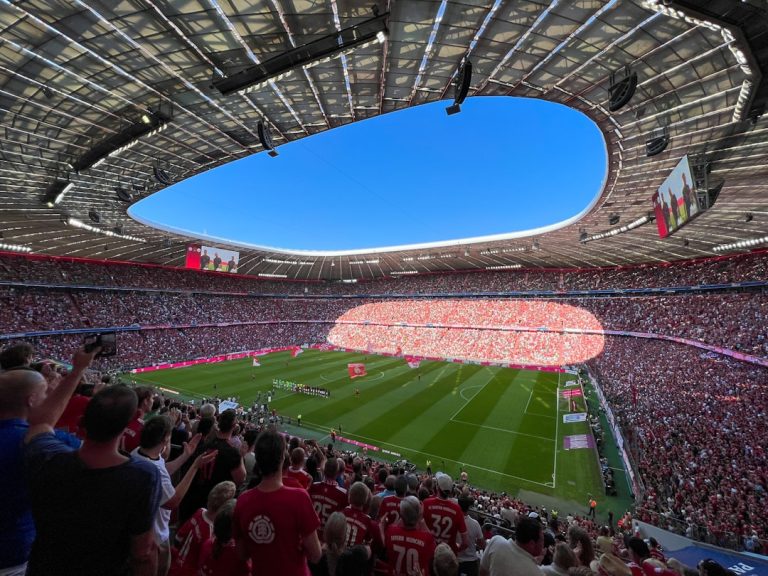
The 2026 World Cup is expected to generate $180M in direct spending for Arlington, with AT&T Stadium hosting seven matches including a semifinal.
Arlington’s combination of low operating costs, access to a skilled workforce through UTA, and DFW’s logistics infrastructure makes it particularly attractive for manufacturing, distribution, and technology companies. The city’s business-friendly policies and proximity to major markets add further appeal.
Housing affordability remains the primary concern, with median home prices rising faster than income growth. Traffic congestion along the I-20/I-30 corridor has worsened, and the city faces a shortage of workforce housing for essential workers in healthcare, education, and service industries.
While Dallas and Fort Worth have seen faster growth rates, Arlington’s economy is more diversified across manufacturing, logistics, and education. The city’s lower cost structure and available land make it attractive for companies priced out of Dallas proper.
Healthcare leads with 1,800 open positions, followed by logistics and transportation at 1,400, manufacturing at 1,100, and technology at 900. The UTA campus area has the highest concentration of entry-level opportunities.
AT&T Stadium’s role as a World Cup venue will bring an estimated 250,000 visitors to Arlington over the tournament period. Local businesses — from restaurants along Division Street to hotels near the Entertainment District — are positioning for what could be the largest single-event economic boost in the city’s history.
Daniel Reyes covers Arlington business, community development, and economic trends for ArlingtonBusinessCouncil.org. A native North Texan, he tracks how DFW’s growth shapes local opportunity and challenge.